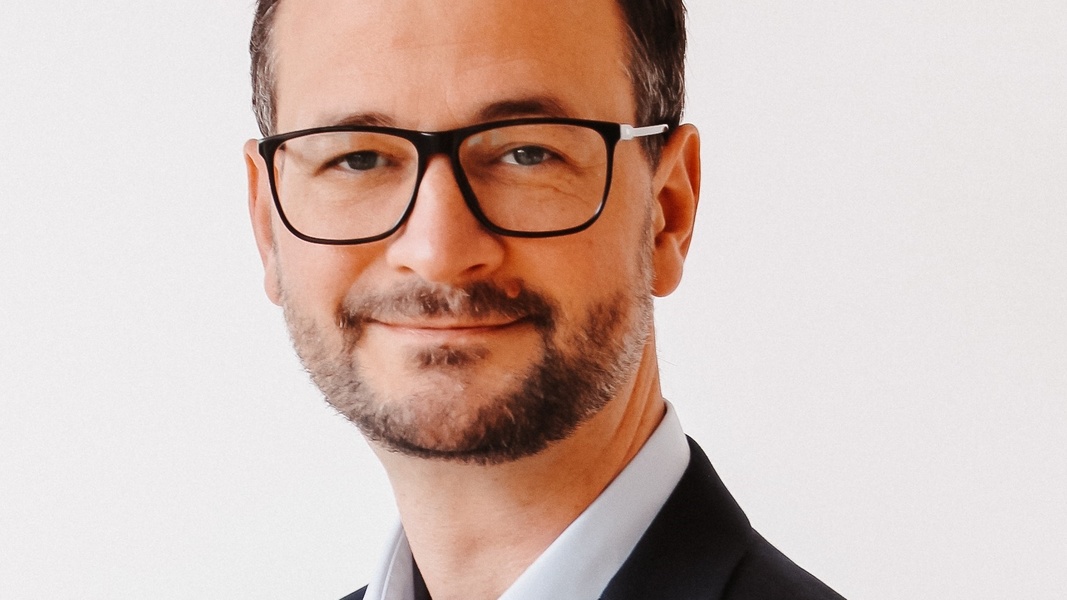
European quotas for synthetic aviation fuels (eSAF) provide certainty for investment and planning, and the first supply chains have been established. This has enabled a pilot flight using five per cent eSAF to be carried out from Amsterdam to Hamburg, demonstrating the practical implementation of blending. In this interview, former Airbus manager Adrian Herberger explains the significance of this flight for further scaling and why Hamburg is a good starting point.
What significance do the targets for synthetic kerosene (known as eSAF) under ReFuelEU Aviation have for your company, and what challenges has production faced so far? How can a fuel distributor such as MB Energy help to ensure that progress is made in the field of eSAF?
Adrian Herberger: ReFuelEU Aviation is a key driver for the ramp-up of eSAF, as the quotas provide certainty for investment and planning. The biggest challenges at present lie in limited availability, high production costs and the development of scalable supply chains. MB Energy can actively support the market ramp-up by acting as a link between production, logistics and customers.
You recently blended eSAF and transported it to the airport for a KLM flight from Amsterdam to Hamburg – could you explain what ‘blending’ means and go into more detail about MB Energy’s role in the supply chain? What proportion of the total refuelling volume for the test flight was made up of eSAF?
Adrian Herberger: Blending refers to the mixing of conventional fuels with a component of biogenic or renewable origin in accordance with specifications, within the approved technical limits. MB Energy has taken on an important role in the supply chain – from coordination and blending through to transport to the airport. The flight from Amsterdam to Hamburg was operated using a fuel blend containing five per cent synthetic kerosene. The quota prescribed by the EU is significantly lower, at two per cent.
Does eSAF offer specific operational and technical advantages over fossil kerosene?
Adrian Herberger: The key advantage of synthetic kerosene lies in its decarbonisation potential, not primarily in entirely new operational characteristics. The crucial factor is that eSAF can be integrated into existing infrastructure and fleets within the applicable specifications. This must be confirmed by engine OEMs, aircraft OEMs and airlines.
What is special about projects with an airline such as KLM?
Adrian Herberger: The passenger flight, carried out in collaboration with KLM and other partners such as Ineratec and Hamburg Airport, demonstrates that decarbonising aviation can only be achieved through joint efforts across the entire value chain. In the long term, synthetic kerosene can help to better mitigate regulatory risks and rising CO₂ costs. Such projects are particularly valuable for testing the use of blends in routine operations.
How does MB Energy position itself overall in the European market for renewable fuels?
Adrian Herberger: We want to actively support the transition from pilot projects to robust supply chains. This applies not only to the physical supply but also to the commercial structuring and operational feasibility. Our aim is to work together to create the conditions for a scalable, reliable and marketable supply of synthetic aviation fuels in Europe. This applies equally to conventional and sustainable fuels.
MB Energy is a Hamburg-based company. What role does Hamburg’s location play for you in relation to developments in the aviation sector concerning eSAF?
Adrian Herberger: Hamburg is a particularly relevant location for us because it brings together key expertise in aviation, logistics, industry and the energy sector. Research, development, production and maintenance all take place in one place. Hamburg is the third-largest aviation industry cluster in the world. This proximity to key players makes Hamburg a highly suitable environment for driving forward new solutions for the decarbonisation of air transport. For MB Energy, Hamburg is not only a corporate base but also a strategic environment for cooperation, innovation and practical implementation. The combination of port and logistics expertise, an industrial base and the aviation ecosystem creates favourable conditions for jointly developing areas such as renewable fuels, infrastructure and supply chains.